
Step into the mystical world of Dragon’s Dogma 2 with the ultimate beginner-friendly Mage build that perfectly balances potent support magic and fiery offense. Whether you’re healing allies, enchanting weapons, or unleashing devastating lightning strikes, this guide reveals the essential skills, gear, and party setup to transform you into an indispensable arcane force on the battlefield. Ready to master the art of spellcasting and dominate your foes? Your journey as a Mage starts here.
The Mage is one of four vocations you can choose right at the beginning of the game, and while you’re free to change vocations at any point, the Mage is impressively strong thanks to its ability to stay out of danger while dealing impressive DPS from afar, all while supporting your pawns with healing spells.
In the early stages, you’ll need to choose between various weapon skills and augments to build out your Mage, so we’re here to provide a little direction as to what you should prioritize first. What follows is a breakdown of the best Mage build for beginners in Dragon’s Dogma 2.
Best Mage weapon skills to get first in Dragon’s Dogma 2
For beginners aiming to master the Mage vocation in Dragon’s Dogma 2, prioritizing certain weapon skills can greatly enhance both offensive and support capabilities. Essential early skills include High Flagration for its area fire damage that ignores enemy defense and allows movement while casting, and High Levin, a powerful lightning attack that can strike multiple times with additional stamina use. High Palladium is invaluable for defense, providing a damage shield that also benefits nearby allies. Support skills like Halidom and its upgraded High Halidom remove negative effects from party members, while Argent Tonic and Argent Succor offer crucial healing in combat. These weapon skills collectively balance damage output, party support, and survivability, making them the best to acquire first for an effective Mage build.
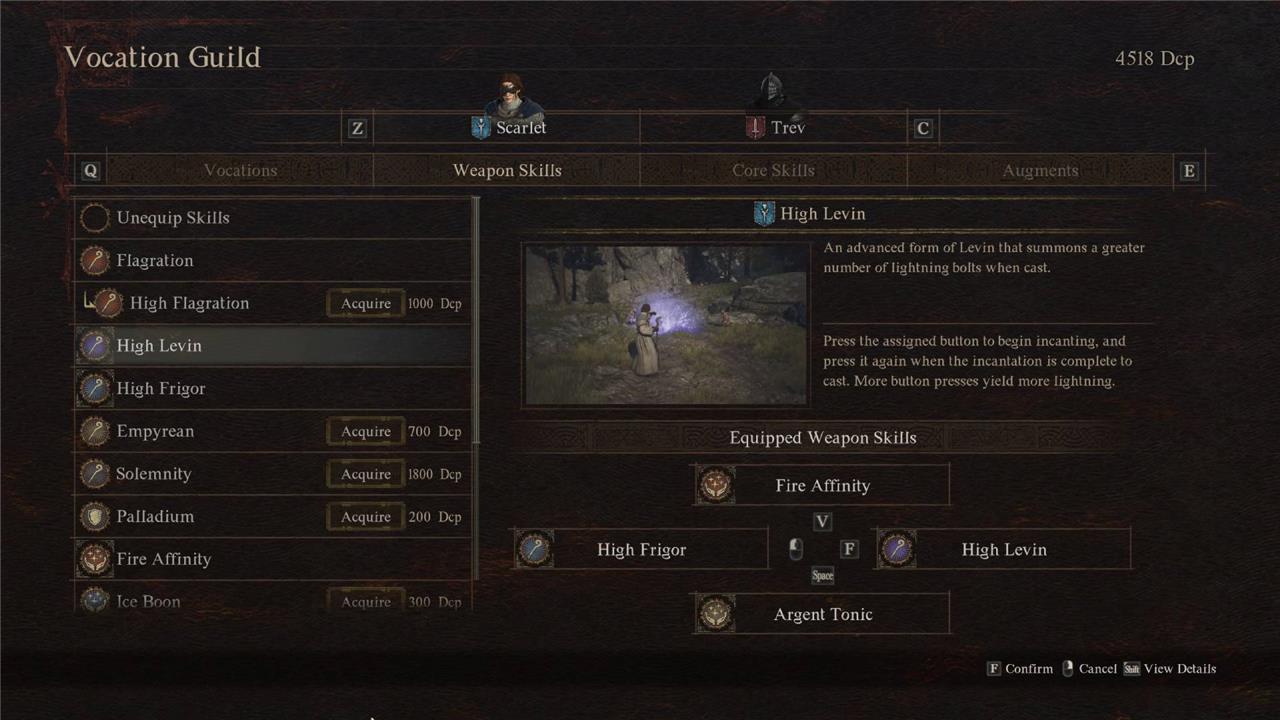
After you’ve ranked up the Mage vocation a few times, you’ll have access to a number of weapon skills, all offering something very slightly different. Our build is focused on being a jack-of-all-trades Mage rather than dedicated to solely healing or dishing out pure DPS, mainly since this build is aimed at beginners. It also goes without saying that you should upgrade each of these spells to the High variant as soon as you get the chance.
- Levin
- Frigor
- Fire Boon
- Argent Tonic
In the early stages of the game, as you explore Vermund, Levin is by far the most powerful attack spell for a Mage. You won’t encounter too many foes resistant to lightning, and when you upgrade to High Levin, you can cast a staggering number of strikes in the same spot. Direct hits can knock down smaller enemies too, and it has some decent targeting range, so you can keep your distance with ease.
Your other primary spell for dealing damage should be Frigor, which creates an enormous ice pillar with spikes protruding at your chosen target, and will often fling them into the air. This can hit multiple foes at once, and can also be used as a movement aid: The lingering ice block can be climbed upon, which, we can all agree, is extremely. cool. (Yes, yes, pun intended.) It deals a significant amount of damage and can also be cast from a fair distance.
We haven’t chosen Flagration as one of the damage-dealing spells because it’s a little less impactful in terms of staggering enemies, and it takes much longer to cast when emitting the flames, limiting your movement. However, you’ll still want some fire damage in your party, so opt for Fire Boon. This simply enchants your chosen ally’s weapon with fire damage, so they can bring the heat.
Finally, as a Mage with this build, you want to be accompanied by some pawns who aren’t afraid to get into the thick of battle, so healing them from afar is a necessity. Argent Tonic does exactly this, though note that it doesn’t recover the loss gauge.
Best Mage core skills and augments in Dragon’s Dogma 2
The best Mage core skills in Dragon’s Dogma 2 focus on a balance of healing, offense, and utility. Key skills include Anodyne, which creates a healing sigil to restore health for you and your allies; Focused Bolt, a powerful magickal burst that adapts to your active enchantment for versatile offense; Quickspell, which significantly speeds up spellcasting at the cost of stamina; and Levitate, allowing temporary flight for both tactical advantage and exploration. As for augments, essential choices are Apotropaism to boost magick defense, Beatitude to enhance healing effects, Perpetuation to extend enchantment durations, and Exaltation to improve stamina recovery. These core skills and augments together create a Mage build that excels in support, survivability, and sustained magical output, ideal for beginners aiming to master the Mage vocation in Dragon’s Dogma 2.

You should grab all the available core skills and augments for the Mage vocation as soon as possible. As with all vocations, as you reach the latter stages of your Mage build, more augments will become available to the point where you have to pick and choose, but since there are six empty slots, that takes a while to reach.
Beatitude is especially helpful early on because it increases the amount of health you recover while healing, while Quickspell is an essential core skill to speed up how quickly you can cast. Levitate is also a huge help, as it allows you to cross gaps and distances you otherwise wouldn’t reach.
Best Mage equipment in Dragon’s Dogma 2
The best Mage equipment in Dragon’s Dogma 2 focuses on maximizing Magick power and enhancing stamina for sustained spellcasting. Top-tier Mage weapons include the Dragon’s Nous, offering the highest Magick level at 430 along with strong Strength and Knockdown Power, and Legion’s Might, known for its high Magick of 400 and a unique effect allowing Pawns to revive themselves. For armor, sets like the Illuminary Crown, Monastic Toga, and Neophyte’s Hosen provide excellent balance between Defense and Magick Defense, crucial for survivability. Rings such as the Ring of Quickening and Ring of Recitation help with stamina and casting speed, while cloaks that grant resistance to status effects are recommended. Prioritizing weapon upgrades over armor is advised to boost offensive capabilities, making this equipment setup ideal for both beginners and advanced players aiming to excel as a Mage.
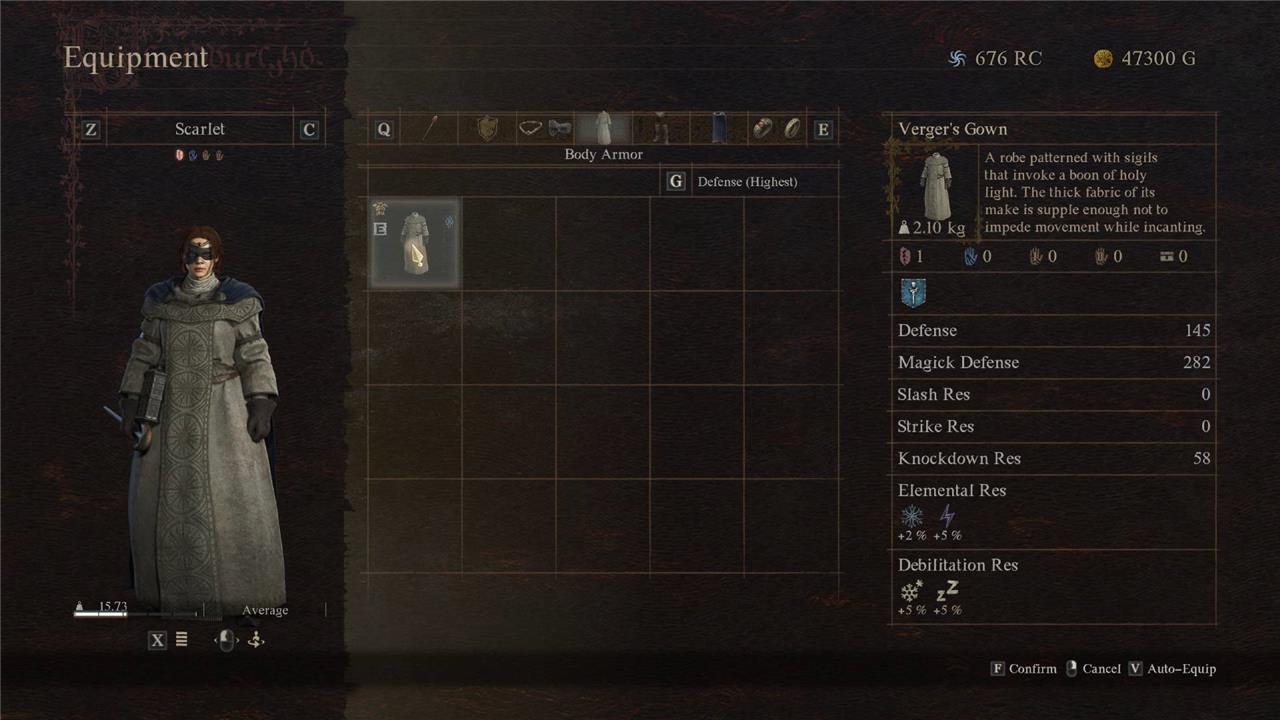
When it comes to weapons and armor, your options are fairly limited early on in Dragon’s Dogma 2. Most pieces of equipment are locked to specific classes, so you won’t get true freedom in choosing what to use until much later in the game when you’ve acquired lots of various bits, but if you head to Bjorn’s Armory in Vernworth, you can find some solid early game options.
I’d recommend the Verger’s Gown (10,200 gold), as it offers better defensive stats over the Magician’s Coat, and is lighter to boot, along with the Savant’s Boots (6,770 gold) for the same reason. The Serpentine Circlet (6,300 gold) is also worth acquiring, but you don’t need to worry about buying a cloak as you’ll get the Expeditioner’s Cloak through the main story fairly early on.
A stone’s throw from Bjorn’s Armory is Roderick’s Smithy, where you can buy the Anchor to Heaven staff, one of only two Mage weapons for sale here and the best you’re likely to find for some time. Don’t forget to upgrade all of your equipment as much as you can too with the materials and resources you have.
What makes this Mage build ideal for beginners in Dragon’s Dogma 2
This Mage build is ideal for beginners in Dragon’s Dogma 2 because it strikes a perfect balance between versatile support and offensive capabilities, making it accessible and effective without overwhelming complexity. It focuses on healing and buffing allies with powerful utility spells like Anodyne for area healing and weapon enchantments that boost elemental damage, while also retaining offensive spells such as Levin and Focused Bolt to deal solid damage when needed. The build’s core skills enable faster spellcasting and mobility, which help beginners stay alive and adapt to combat situations easily. Additionally, the Mage’s supportive nature synergizes well with common party compositions, providing buffs like increased attack speed and stamina regeneration that enhance the entire team’s performance. This makes it forgiving and rewarding for new players who want to contribute meaningfully in battles without relying solely on high damage output. The Mage’s passive playstyle also suits AI-controlled pawns, allowing beginners to delegate some responsibilities while learning the game. Overall, this build offers a straightforward yet powerful way to master magic and support roles early in the game.
Why is a support-focused Mage build easier for beginners to master in DD2
A support-focused Mage build is easier for beginners to master in Dragon’s Dogma 2 because the Mage’s core role centers on healing, buffing, and enhancing allies rather than complex damage rotations, which simplifies gameplay and reduces pressure during combat. Since most Mage spells are designed for support-such as healing auras, debuff removal, and weapon enchantments-players can focus on timely casting of these utility spells to keep their party alive and effective without needing to manage high-risk offensive tactics or intricate combos.
Additionally, the Mage’s supportive spells like Anodyne (area healing) and Boon (weapon enchantments) provide clear, immediate benefits that are easy to understand and apply, making the class forgiving for newcomers. Core skills like Quickspell speed up casting in emergencies, and Levitate offers mobility to avoid danger, further enhancing survivability and ease of play.
Moreover, the Mage’s role naturally encourages a safer backline position, reducing the likelihood of being overwhelmed by enemies, which is ideal for players still learning game mechanics. The supportive nature also synergizes well with party members, allowing beginners to contribute meaningfully without needing to master complex offensive magic, which is better suited to advanced vocations like Sorcerer. This combination of straightforward utility, survivability, and team impact makes the support-focused Mage build a beginner-friendly choice in Dragon’s Dogma 2.
